Die Spotting Press and Mold Finishing Capabilities at CNCTech


In precision mold manufacturing, achieving dimensional accuracy for individual components is only one part of the process. Ensuring proper alignment and consistent contact between the mold core and cavity requires additional inspection, adjustment, and finishing operations after assembly.
Dimensional deviations accumulated across multiple components, distortion following heat treatment, and deformation under operating loads can affect the contact condition of mating mold surfaces. This is why die spotting plays an important role in mold fitting and finishing, helping manufacturers identify contact inconsistencies and make necessary adjustments before mold trials and production.
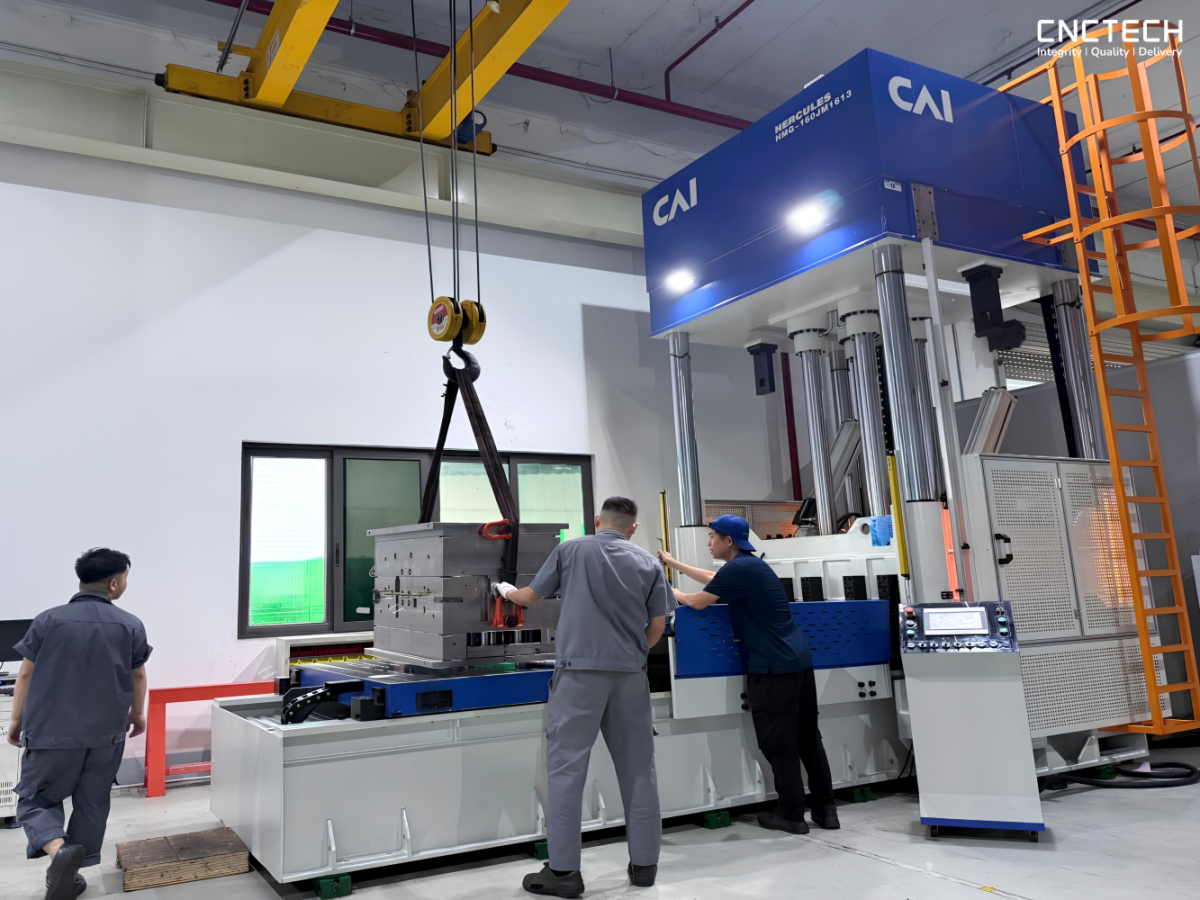
To strengthen its in-house mold inspection and finishing capabilities, CNCTech Manufacturing has put the SXKH HMG-160JM1613 Die Spotting Press into operation at its mold manufacturing facility. This investment enhances CNCTech's ability to handle, inspect, align, and finish large and heavy mold assemblies within the machine's rated capacity.
What Is Die Spotting in Mold Manufacturing?
Die spotting is a mold fitting and inspection process used to evaluate the contact condition between mating surfaces, particularly the mold core and cavity.
After individual mold components are machined, heat-treated, and assembled, their actual contact conditions may differ from the intended design due to accumulated dimensional variations or deformation. Die spotting helps identify areas where contact is insufficient or uneven, allowing technicians to make targeted adjustments.
The process generally involves:
Mold opening and closing: Controlling the movement of the upper and lower mold sections to inspect their mating surfaces.
Contact condition inspection: Identifying areas with uneven or insufficient contact between the mold core and cavity.
Mold alignment: Assessing the relative positioning and parallelism of mating surfaces.
Fitting and adjustment: Making necessary corrections to improve contact conditions and assembly accuracy.
Final inspection: Checking the mold assembly before proceeding to mold trials.
By identifying fitting issues during the finishing stage, die spotting helps improve mold assembly quality and reduce potential adjustment work during subsequent trials.
SXKH HMG-160JM1613 Die Spotting Press at CNCTech
To support more demanding mold assembly and finishing requirements, CNCTech has integrated the SXKH HMG-160JM1613 Die Spotting Press into its manufacturing operations.
Designed for large mold assemblies, the machine provides a substantial working area and load capacity, supporting inspection and fitting operations for heavy tooling within its specified operating limits.
Key Technical Specifications
The SXKH HMG-160JM1613 Die Spotting Press features the following specifications:
| Technical Parameter | Specification |
| Working table dimensions | 1,600 × 1,300 mm |
| Maximum lower table load capacity | 16 tons |
| Maximum upper table load capacity | 8 tons |
| Maximum pressing force | 1,600 kN |
| Structural configuration | Four guide columns and four hydraulic cylinders |
These specifications provide CNCTech with the capability to handle large and heavy mold assemblies while maintaining controlled operating conditions throughout the spotting and inspection process.
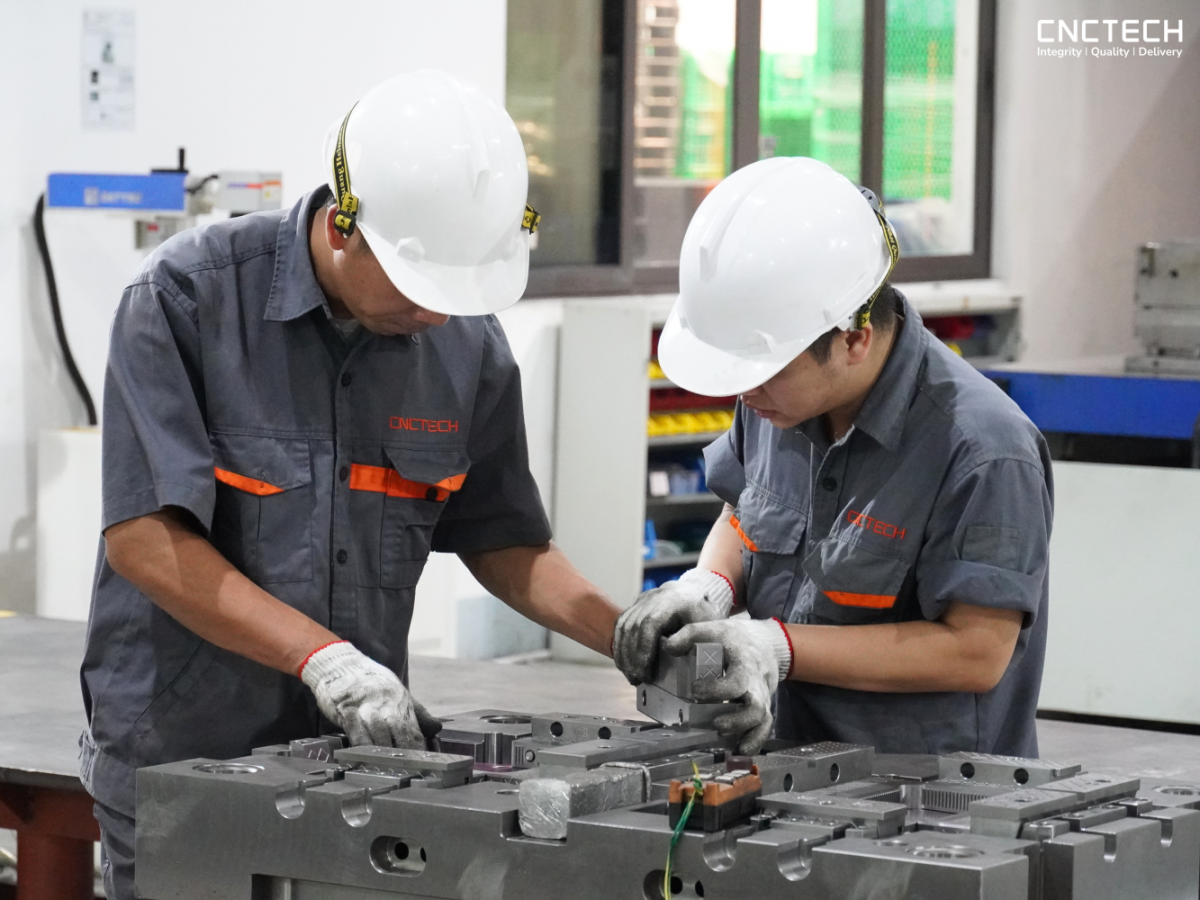
Key Die Spotting and Mold Finishing Capabilities
Integrating the die spotting press into its mold manufacturing facility strengthens several important operations throughout the mold finishing process.
1. Controlled Hydraulic Mold Opening and Closing
The hydraulic system enables controlled opening and closing of assembled molds, allowing technicians to inspect contact conditions between the mold core and cavity.
This supports the identification of areas requiring adjustment and facilitates mold spotting, alignment, and fitting before production.
2. Surface Parallelism Measurement
The machine supports the assessment of parallelism between working surfaces, providing additional information for mold alignment and inspection.
Evaluating surface parallelism is an important part of checking the relative positioning of mold components and identifying potential fitting issues during the finishing stage.
3. Smart One-Touch Control
The integrated one-touch control function simplifies repetitive operating sequences and makes machine operation more convenient.
By reducing unnecessary manual handling during repeated operations, this function helps improve workflow efficiency and supports more consistent operation.
4. High-Force Mold Spotting for Large Assemblies
The machine's four-guide-column and four-hydraulic-cylinder configuration supports force distribution during operation.
Combined with its maximum pressing force of 1,600 kN and substantial table load capacities, the press enables CNCTech to perform spotting and fitting operations on large, heavy mold assemblies within the machine's specified capacity.
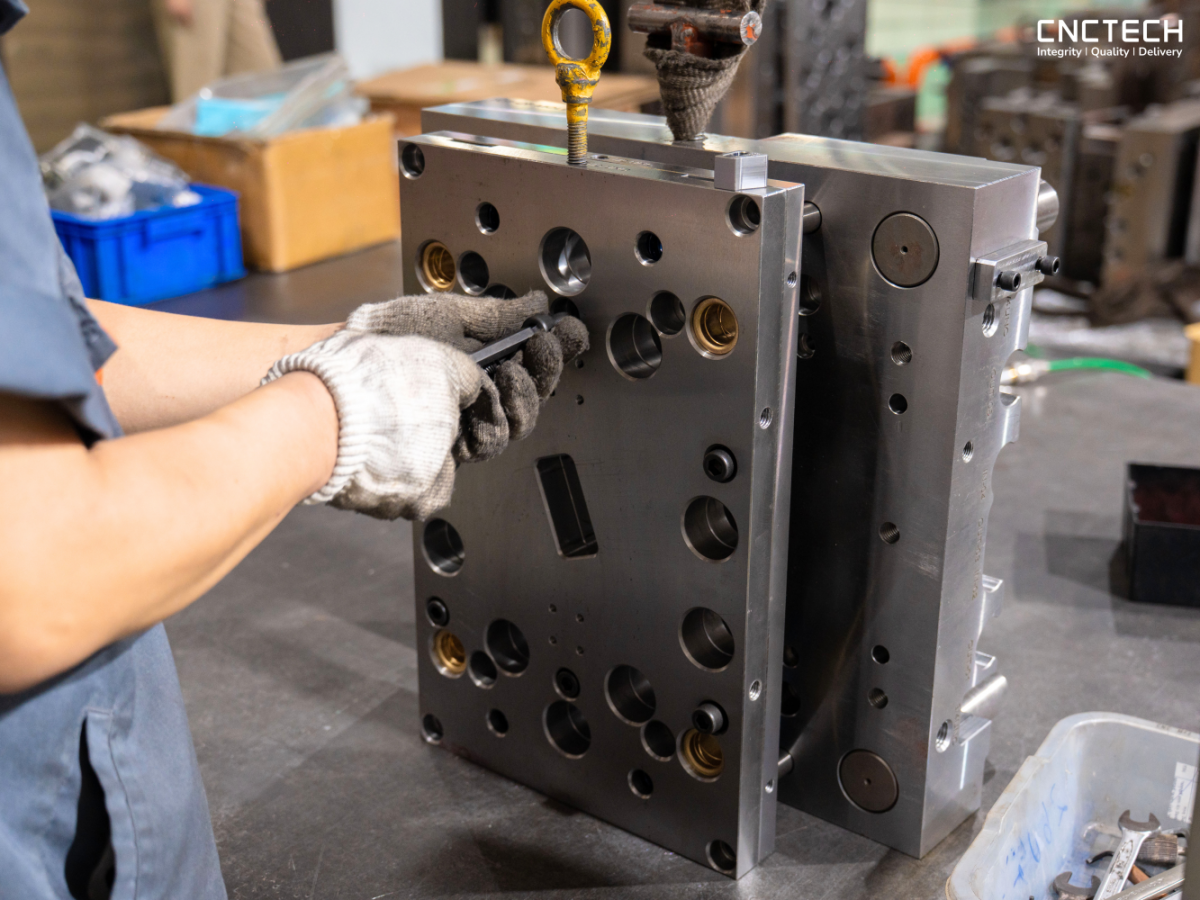
How Die Spotting Improves Mold Manufacturing Quality
Die spotting is more than an additional inspection operation. It contributes to better process control and coordination between mold manufacturing stages.
At CNCTech, the integration of the SXKH HMG-160JM1613 Die Spotting Press strengthens manufacturing capabilities in three key areas.
1. Earlier Quality Control
Identifying contact inconsistencies and fitting issues during mold finishing allows technicians to address potential problems before mold trials.
This helps reduce the risk of discovering avoidable assembly issues at later manufacturing stages and supports more effective quality control throughout the mold manufacturing process.
2. Greater Control Over Production Schedules
Performing mold spotting, inspection, and adjustment in-house allows CNCTech to coordinate mold finishing activities more closely with other manufacturing operations.
This reduces dependence on additional external processing arrangements and helps minimize unnecessary waiting time and repeated adjustment cycles.
3. Expanded Mold Handling Capacity
With a working table measuring 1,600 × 1,300 mm and a maximum lower table load capacity of 16 tons, the equipment strengthens CNCTech's ability to inspect and finish larger and heavier mold assemblies.
This provides additional manufacturing capability for projects with more demanding tooling dimensions and technical requirements, within the machine's rated operating limits.
Strengthening CNCTech's Integrated Mold Manufacturing Capabilities
At CNCTech, mold finishing is an important part of the broader mold manufacturing process. The quality of a finished mold depends not only on the accuracy of individual machined components but also on how effectively these components are assembled, aligned, inspected, and adjusted.
The investment in the SXKH HMG-160JM1613 Die Spotting Press reinforces CNCTech's in-house capabilities in mold spotting, mold inspection, mold fitting, and finishing operations.
By strengthening process control and expanding its ability to handle large mold assemblies, CNCTech continues to develop its manufacturing capabilities to meet increasingly demanding customer requirements.
For international partners seeking a manufacturing supplier with integrated mold manufacturing and finishing capabilities, CNCTech is committed to delivering reliable quality, process control, and on-time delivery.
INTEGRITY | QUALITY | DELIVERY
Looking for a mold manufacturing partner in Vietnam?
Contact CNCTech to explore our mold manufacturing, precision machining, and integrated manufacturing capabilities.

Tin tức liên quan