CNC Machining for Semiconductor: 6 Factory Requirements


A CNC part that meets the specified dimensions does not necessarily meet the requirements of the Semiconductor industry.
In the semiconductor industry, products must not only be accurate. They must also be stable, clean, made of the right material, and traceable across the entire production process.
So what capabilities does a CNC factory need to join the Semiconductor supply chain?
This article covers the essentials of CNC machining for semiconductor equipment: what makes these parts different, the six core capabilities a factory needs, and how to prove them with data.
1. What Makes CNC Parts for Semiconductor Different
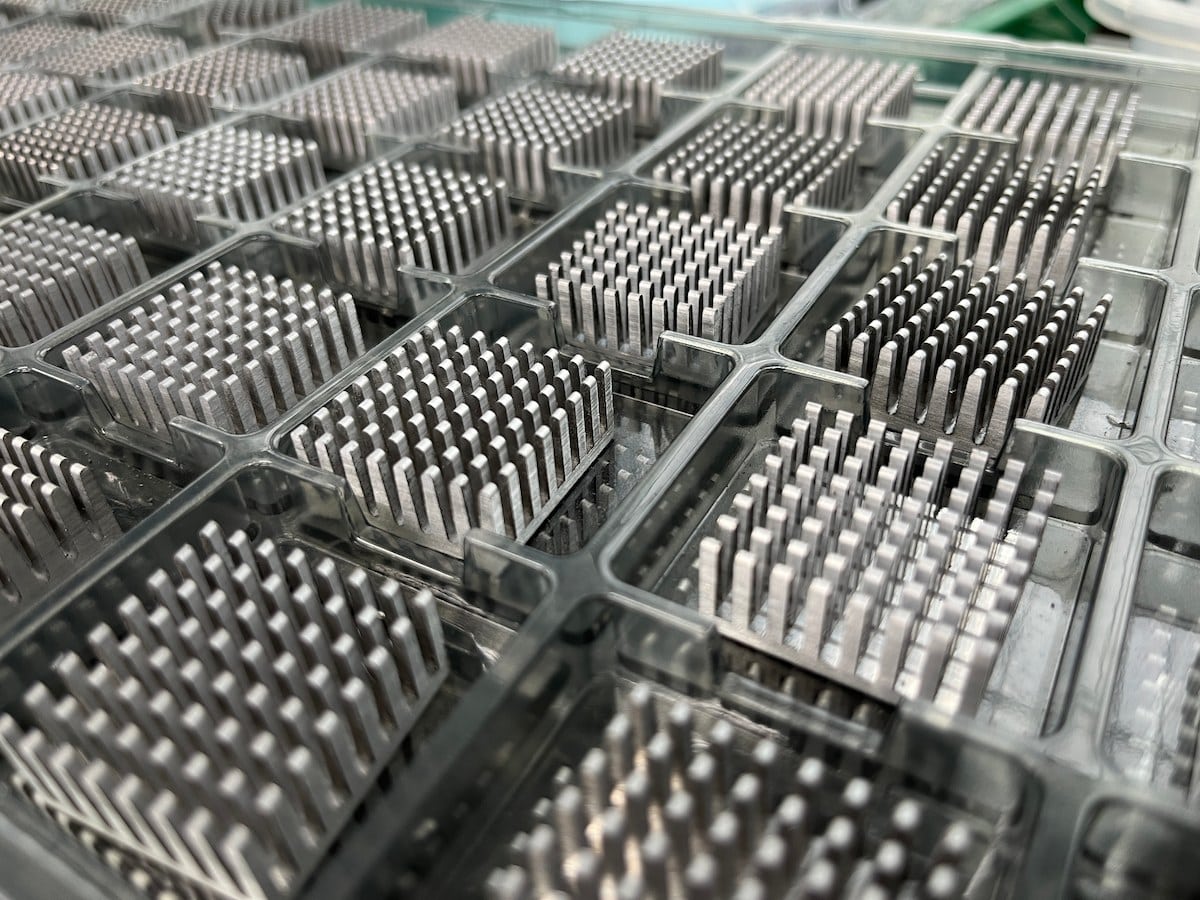
Semiconductor manufacturing equipment uses many precision mechanical parts, such as components in equipment modules, motion mechanisms, vacuum systems, handling systems, and various jigs/fixtures.
These parts are usually made from aluminum, stainless steel, and other engineering materials.
What sets them apart from general CNC machining is the need to control all of the following at the same time:
- Dimensional and geometric accuracy.
- Stability between production lots.
- Surface quality and roughness.
- Burrs, scratches, and other surface defects.
- Cleanliness, particles, and contamination.
- Material, packaging, and traceability.
- Precision is not only in the CNC machine. It lies in the entire production chain.
2. Six Core Capabilities of a Semiconductor-Ready CNC Factory
① MACHINE – Equipment
The CNC system must suit precision machining requirements, with high stability and repeatability. Equipment, tooling, fixtures, and production conditions must be controlled to fit each type of part.
② ACCURACY
Control dimensional tolerance, geometric tolerance, flatness, parallelism, and position. The factory needs suitable measuring equipment such as a CMM and a reliable system for controlling measurement results.
③ MATERIAL
Ensure the correct material grade, provide documentation when required, and be able to trace the material's origin and lot number throughout production.
④ SURFACE – Surface Quality
Control surface roughness, burrs, scratches, tool marks, and other defects that could affect product function.
⑤ CLEANLINESS
Control metal particles, oil, coolant residue, and other sources of contamination. Depending on the application, the product may need a dedicated cleaning and packaging process.
⑥ TRACEABILITY
Be able to identify the material, machine, process step, operator, inspection results, and production history of each product lot.
3. From “We Can Make It” to “We Can Prove It”

Semiconductor customers do not only care about what equipment a factory has. They also want to know how the factory can prove its capability. Key evidence includes:
Capability | Supporting records |
|---|---|
Accuracy | CMM / Inspection Report |
Surface quality | Roughness Measurement |
Material | Material Certificate |
Stability | SPC / Cpk when required |
Cleanliness | Cleaning / Cleanliness Test |
Traceability | Lot & Process Records |
Quality system | ISO Certification |
Standards such as ISO 9001, ISO 14644, and SEMI Standards may be referenced depending on the product, the application, and the customer's specific requirements. Not every CNC part for Semiconductor follows the same set of standards.
Data is part of the product.
Data does not only serve quality control. It is also the basis on which customers trust a supplier's capability.
4. CNCTech and Its Approach to Developing Precision Manufacturing Capability
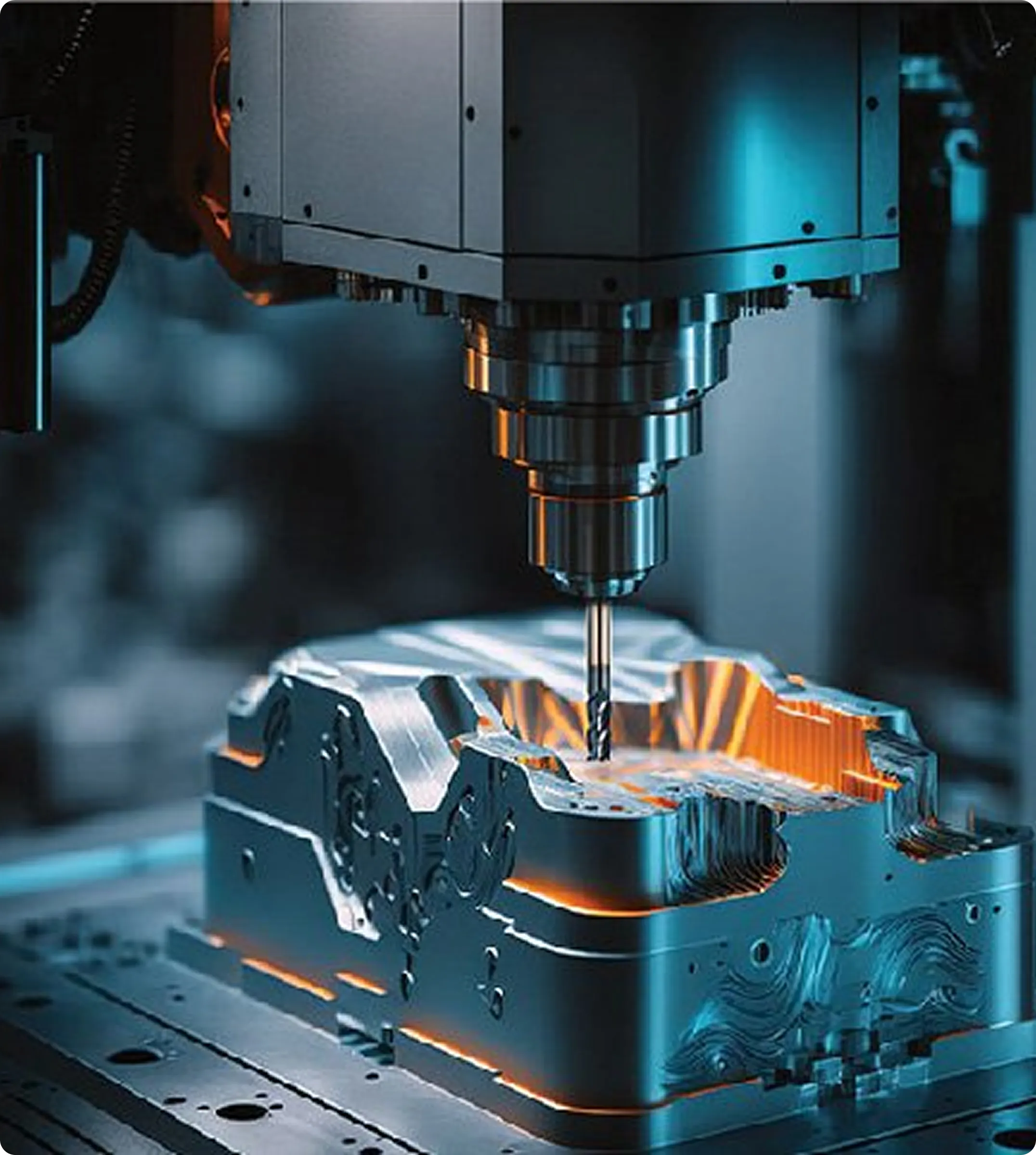
At CNCTech, especially in the Hitech area, precision machining capability is being developed through a CNC milling system with equipment such as Makino, together with engineering capability, programming, tooling, and measurement systems.
CNCTech aims to control the process from end to end:
Drawing → Programming → Machining → Inspection → Cleaning → Packaging → Traceability.
The goal is not only to produce a part that passes at the time of inspection, but to build a process that can keep quality stable and prove it with data.
5. Conclusion
Semiconductor does not only need a factory with accurate CNC machines.
Semiconductor needs a production system that can ensure:
ACCURACY – STABILITY – CLEANLINESS – TRACEABILITY.
And more importantly, it is not enough to prove that we can make it. We must prove that we can make it stably, keep it under control, and sustain that quality.
That is the foundation for a CNC factory to become a trusted partner in the Semiconductor supply chain.
Frequently Asked Questions
How is CNC machining for semiconductor different from general CNC machining?
Beyond dimensions, parts must meet requirements for lot-to-lot stability, surface quality, material origin, cleanliness, packaging, and traceability, backed by data.
Does a CNC factory need many certifications to serve semiconductor customers?
Not necessarily. ISO 9001, ISO 14644, and SEMI Standards may be referenced depending on the product, the application, and the customer's requirements. Not every part follows the same set of standards.
What records prove a part meets requirements?
Depending on requirements: CMM/inspection report, roughness measurement, material certificate, SPC/Cpk, cleaning or cleanliness test, lot and process records, and ISO certification.
Talk to CNCTech About Precision Machining for Semiconductor
Looking for a precision machining partner that controls stability, cleanliness, and traceability? Contact CNCTech to discuss your drawings and requirements.
Contact information
Email: hello@cnctech.vn
Phone: (+84) 868 208 111
Corporate Website: https://cnctech.com.vn/
Manufacturing Technology Website: https://cnctech.com.vn/manufacturing
Linkedin: http://linkedin.com/company/cnctech-manufacturing-technology/
Tiktok: https://www.tiktok.com/@cnctechmanufacturing
Youtube: https://www.youtube.com/@cnctech-vn

Tin tức liên quan