From AS9100 Certification to the Shop Floor: What Really Keeps Quality Consistent in Production?


In precision manufacturing, achieving AS9100 certification or producing a flawless First Article is not necessarily the biggest challenge.
The more difficult question comes with the 10th production batch or when the same part returns to production one or two years later: How can quality remain consistent across batches and production shifts?
A certificate provides the framework. But on the shop floor, the real difference lies in how that system controls each stage of the manufacturing process.
Here are several insights from CNCTech’s operations on how AS9100 requirements are translated from documentation into day-to-day manufacturing practices.
1. From engineering drawings to production: How do we ensure the factory is capable before machining begins?
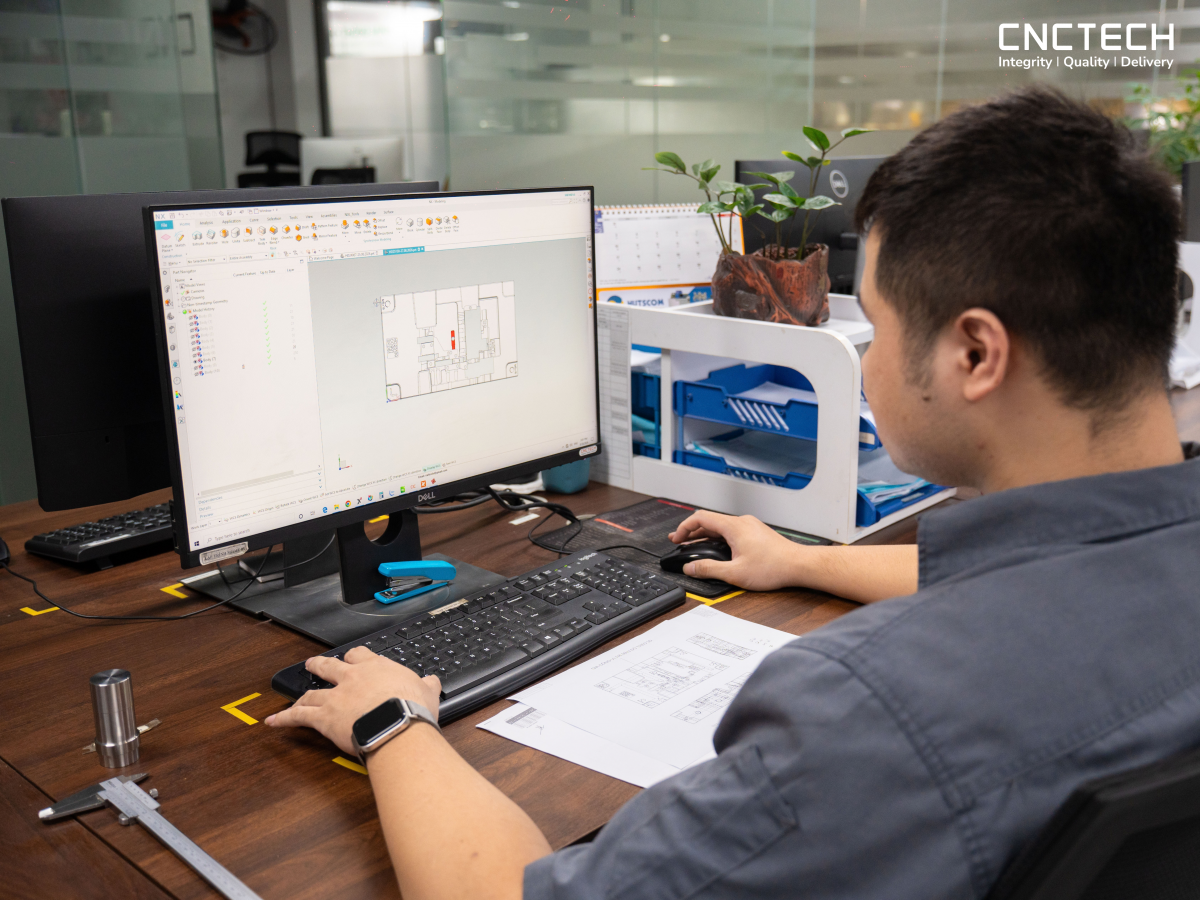
Quality risks can emerge as early as the requirement-review stage if there is no rigorous alignment between design requirements and actual manufacturing conditions.
- Cross-functional review: Upon receiving customer drawings, the Engineering team conducts a detailed review covering product configuration, safety-critical characteristics, dimensions, and tolerances. At the same time, the team evaluates manufacturing feasibility across processes, machinery, materials, measuring equipment, inspection capabilities, lead time, and other special requirements.
- Standardized control documentation: Once requirements are confirmed, they are translated into controlled manufacturing documents, including process routings, production orders, work instructions, inspection standards, Control Plans, PFMEAs, and DFM documentation.
These documents create a common operating language for Engineering, Production, and QC, helping ensure consistent execution and reducing reliance on individual judgment.
2. In-process control: How can defects be stopped at the source rather than discovered at final inspection?
Quality-control resources need to be integrated throughout the production process so that deviations can be detected as early as possible.
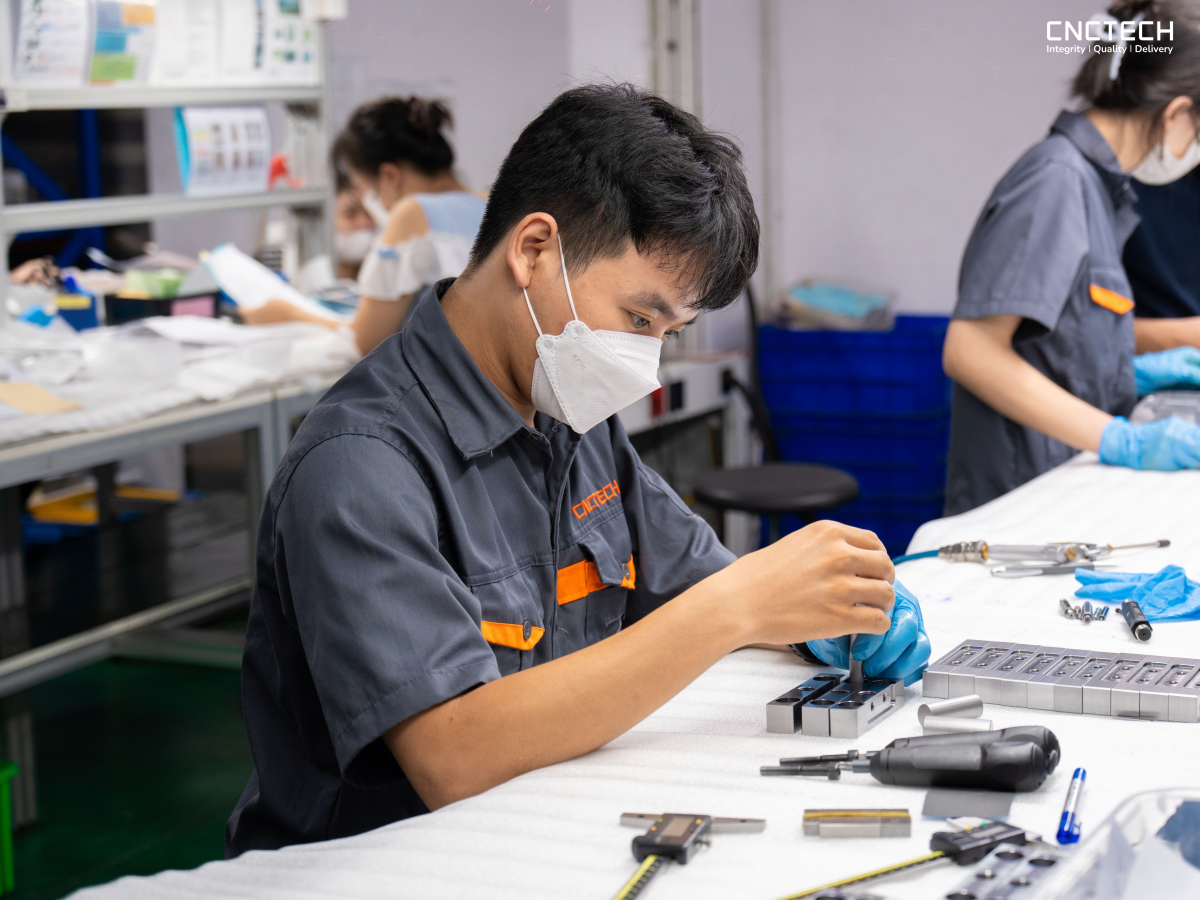
- FAI verification: First Article Inspection (FAI) is required before mass production, as well as when changes are made to the drawing, machine, fixture, or manufacturing process, to verify that the production setup is fully ready.
- In-process inspection: Parts are inspected at each defined process stage according to specified inspection criteria and measuring equipment, helping prevent nonconforming parts from moving downstream or reaching the customer.
- Personnel competency: Quality Control personnel are trained and certified by the internationally recognized certification organization Bureau Veritas (BV), which is a required qualification for inspecting AS9100-controlled products. Before operating equipment, operators are thoroughly trained on part-specific technical requirements, quality standards, manufacturing processes, work instructions, inspection methods, and applicable safety requirements.
- Visual equipment identification: Machines designated for AS9100-controlled products are clearly identified on the shop floor. This helps ensure that the correct equipment is used, supports tighter process control, and minimizes the risk of machine misallocation.
3. When a production batch needs to be reviewed: Are the records detailed enough for full traceability?
A measurement result only reflects the condition of a part at the time of inspection. To determine the source of an issue, the management system must provide a complete picture of the conditions under which the product was manufactured.
- LOT-based traceability: Integrated data across product records, the MES, and MISA enables finished products to be traced back to the applicable drawing revision, material lot, supplier, machine, and operator responsible for production.
- Transparent production records: In-process inspection results, measuring equipment used, calibration status at the time of inspection, and delivery information are all maintained within a traceable data chain that can be reviewed and cross-checked when necessary.
4. When a deviation occurs: Does the system address the root cause or only the symptom?
When a nonconforming product is identified, the first priority is to contain the risk and determine the root cause so that the overall system can be improved.
- Immediate containment: Nonconforming products are identified and segregated immediately to prevent unintended use or shipment.
- Root Cause Analysis (RCA): Relevant functions work together to analyze actual data from inspection results, machines, cutting tools, fixtures, materials, CNC programs, and operator actions, using methodologies such as 5 Why and 4M analysis.
- Corrective and Preventive Action (CAPA): Corrective and preventive measures are developed to address the issue systematically and reduce the risk of recurrence in future production runs.
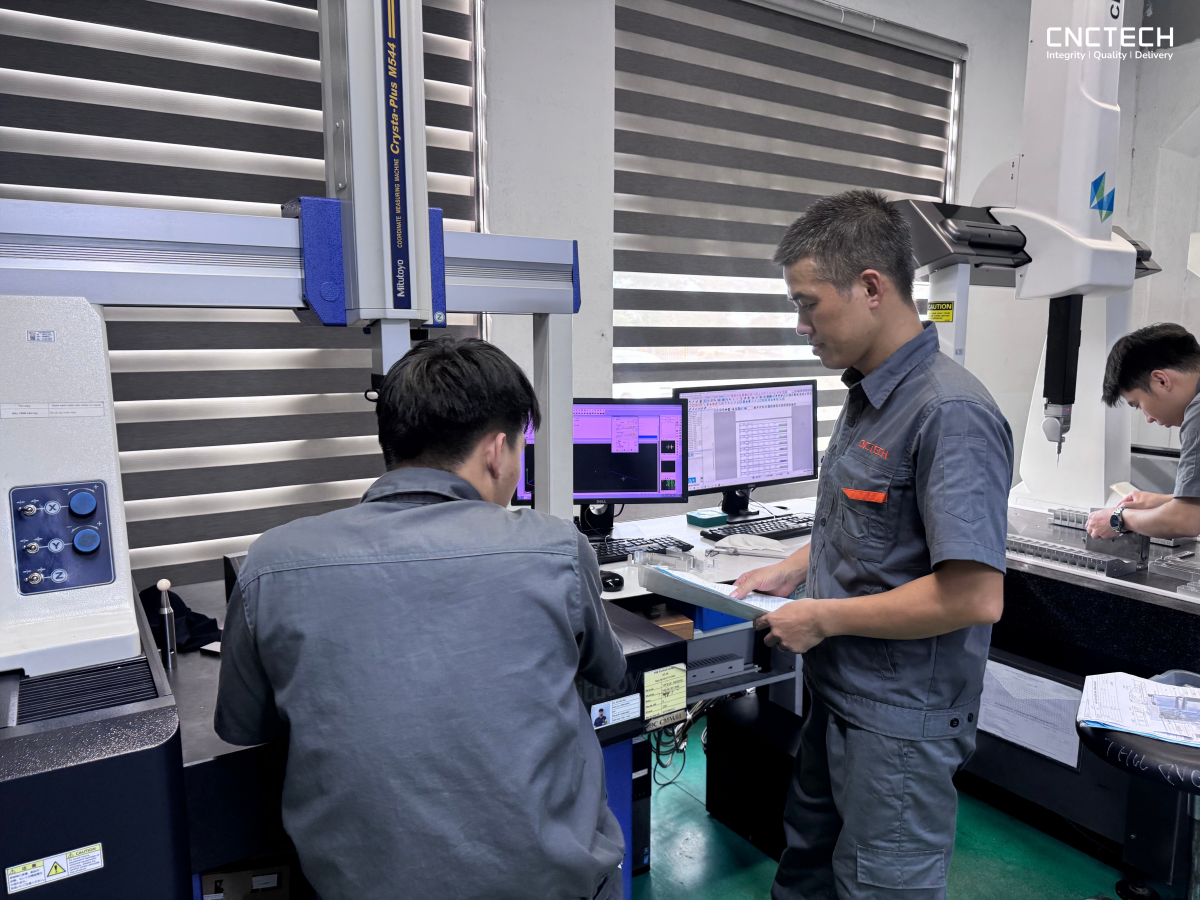
Operating a quality management system in accordance with AS9100 is not about adding more administrative procedures. It is about building operational discipline based on transparent, traceable data:
Requirement Review – Standardized Instructions – Shop-Floor Control – Data Retention – Continuous Improvement.
For professionals managing quality and manufacturing operations:
Which stage is the most costly and most prone to variation when maintaining consistency across repeated production batches?
Contact information
Email: hello@cnctech.vn
Phone: (+84) 868 208 111
Corporate Website: https://cnctech.com.vn/
Manufacturing Technology Website: https://cnctech.com.vn/manufacturing
Linkedin: linkedin.com/company/cnctech-manufacturing-technology
Tiktok: https://www.tiktok.com/@cnctechmanufacturing
Youtube: https://www.youtube.com/@cnctech-vn

Tin tức liên quan