VIETNAM MANUFACTURING IN 2026: TRENDS AND OPPORTUNITIES FOR GLOBAL OEMS


Vietnam is emerging as a strategic manufacturing destination for global OEMs seeking to diversify production and build more resilient supply chains. Beyond cost competitiveness, the country is strengthening its supplier base, supporting industries, and manufacturing capabilities across increasingly complex production requirements.
As Vietnam moves toward higher-value manufacturing, new opportunities are emerging for companies looking to source components, outsource production, or establish long-term manufacturing partnerships. This article explores the key Vietnam manufacturing trends and opportunities shaping 2026.
Vietnam manufacturing in 2026 - Market overview
Vietnam manufacturing entered 2026 with strong growth, supported by rising industrial production, exports, and foreign investment. In the first seven months of the year, the IIP increased 11.4% compared with the same period in 2025. Manufacturing and processing continued to make the largest contribution to overall industrial growth.
→For detailed statistics, see the National Statistics Office of Vietnam’s full report on socio-economic performance in July and the first seven months of 2026.
The country's manufacturing growth is also closely connected with international trade. Manufactured and processed goods account for the overwhelming majority of Vietnam's exports, highlighting the country's role as a production base serving global markets. In the first seven months of 2026, manufactured and processed products accounted for 90.1% of Vietnam's total export value, according to the Ministry of Industry and Trade.
Foreign investment also remains a major force behind Vietnam's industrial expansion. By July 31, 2026, total registered FDI in Vietnam reached US$38.06 billion, up 58.0% year on year, with newly registered capital reaching US$21.05 billion. Manufacturing and processing continue to be a major destination for foreign investment.
Together, these indicators show that Vietnam is not simply attracting interest as a potential manufacturing location. Its industrial base is continuing to expand and serve international demand.
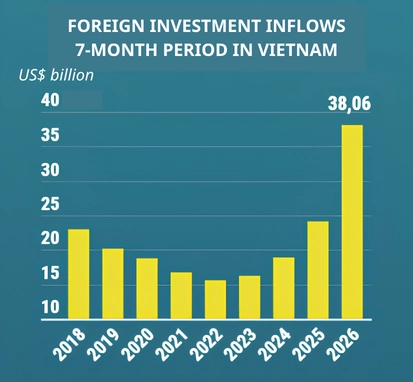
(Vietnam's expanding manufacturing base is supported by industrial production, exports, and foreign investment)
Key trends shaping Vietnam manufacturing in 2026
Supply chain diversification and the China+1 strategy
The China+1 strategy allows companies to maintain production in China while adding manufacturing or sourcing capacity in another country. For the Vietnamese manufacturing sector, this creates opportunities to attract new production, sourcing programs, and supplier relationships from global OEMs seeking to diversify their supply chains.
Vietnam is well positioned for this approach because it already has an established export-oriented manufacturing ecosystem and strong trade connections with major global markets. For OEMs, Vietnam can therefore serve as a complementary production base rather than necessarily replacing an existing supplier network.
Rising foreign investment in manufacturing
Foreign direct investment continues to supportVietnam's industrial and manufacturing development. Manufacturing and processing remain major destinations for FDI, reflecting international companies' continued interest in establishing and expanding production capacity in the country.
FDI also contributes more than capital. International manufacturers can bring advanced production processes, quality management systems, engineering expertise, and supplier requirements that help strengthen the broader manufacturing ecosystem.
This creates opportunities for local manufacturers to become qualified suppliers for global OEMs and participate more deeply in international supply chains.
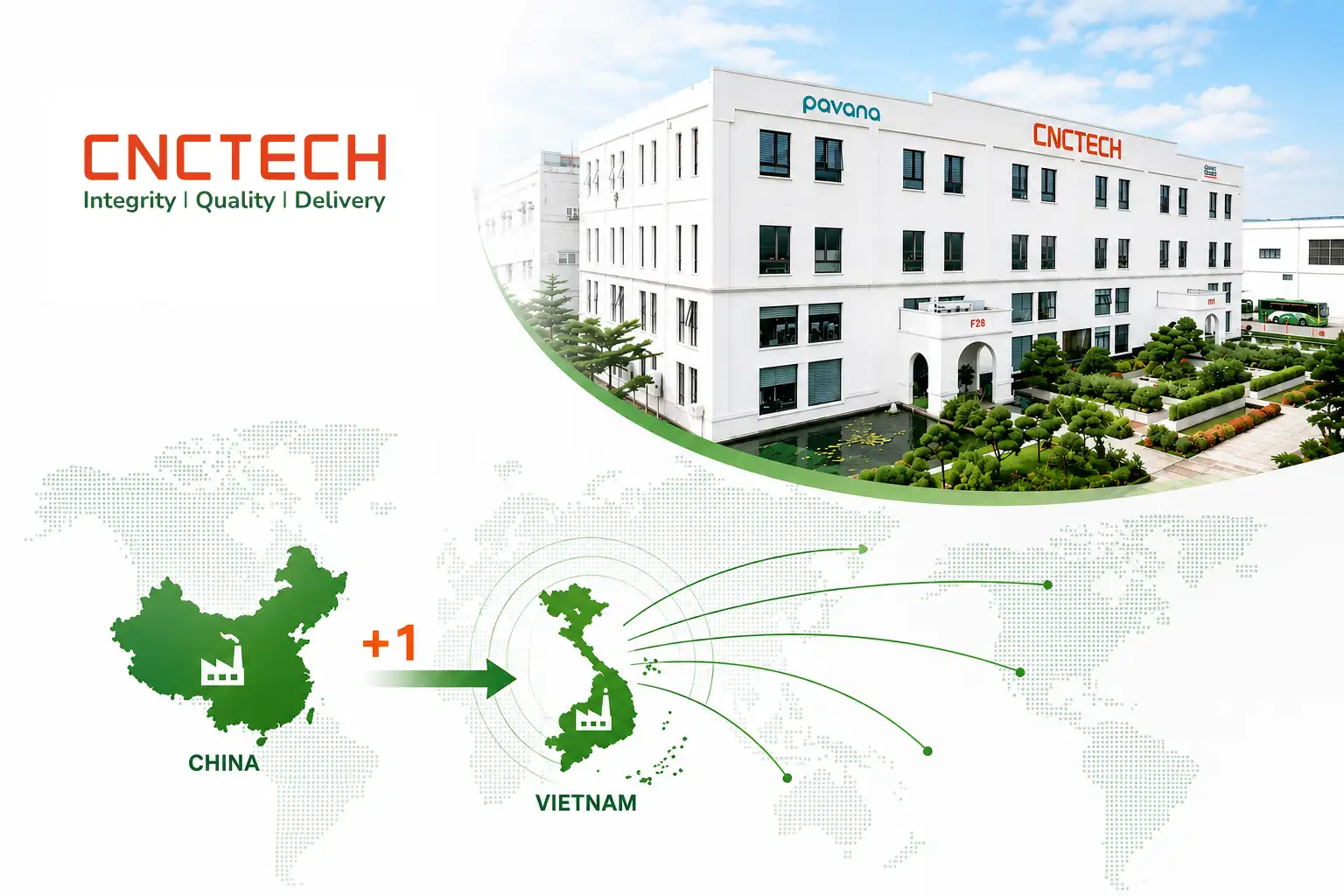
(Vietnam's manufacturing ecosystem is becoming an important option for companies diversifying their Asian supply chains)
A shift toward higher-value manufacturing
Vietnam manufacturing is gradually moving toward higher-value activities such as electronics, industrial machinery, automotive components, automation, and high-tech production. This shift is supported by government efforts to strengthen supporting industries and increase domestic participation in global value chains.
→The World Bank's analysis highlights Vietnam's opportunity to move up global value chains and transition toward higher-value production. World Bank – Viet Nam 2045: Trading Up in a Changing World
Vietnam is also seeking to move beyond labor-intensive manufacturing by strengthening higher-value production capabilities and upgrading its participation in global value chains.
Electronics, industrial machinery, automotive components, precision engineering, semiconductor supporting industries, and other higher-value sectors are becoming increasingly important to the country's industrial development.
Government initiatives are also placing greater emphasis on supporting industries and strengthening domestic enterprises' ability to participate in global supply chains. The government’s Supporting Industry Development Program for 2026–2035 aims to strengthen domestic manufacturing capabilities across key sectors, including electronics, automotive, machinery and automation, and high-tech industries.
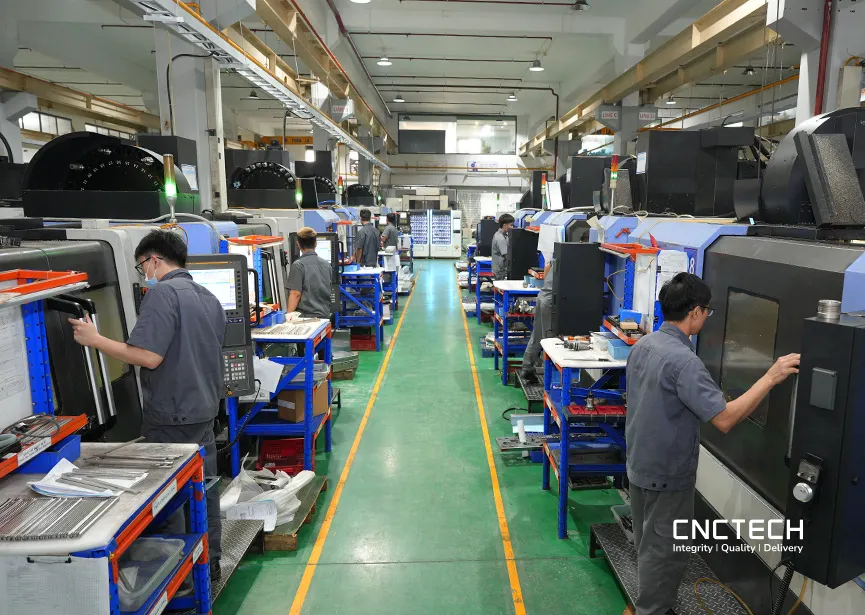
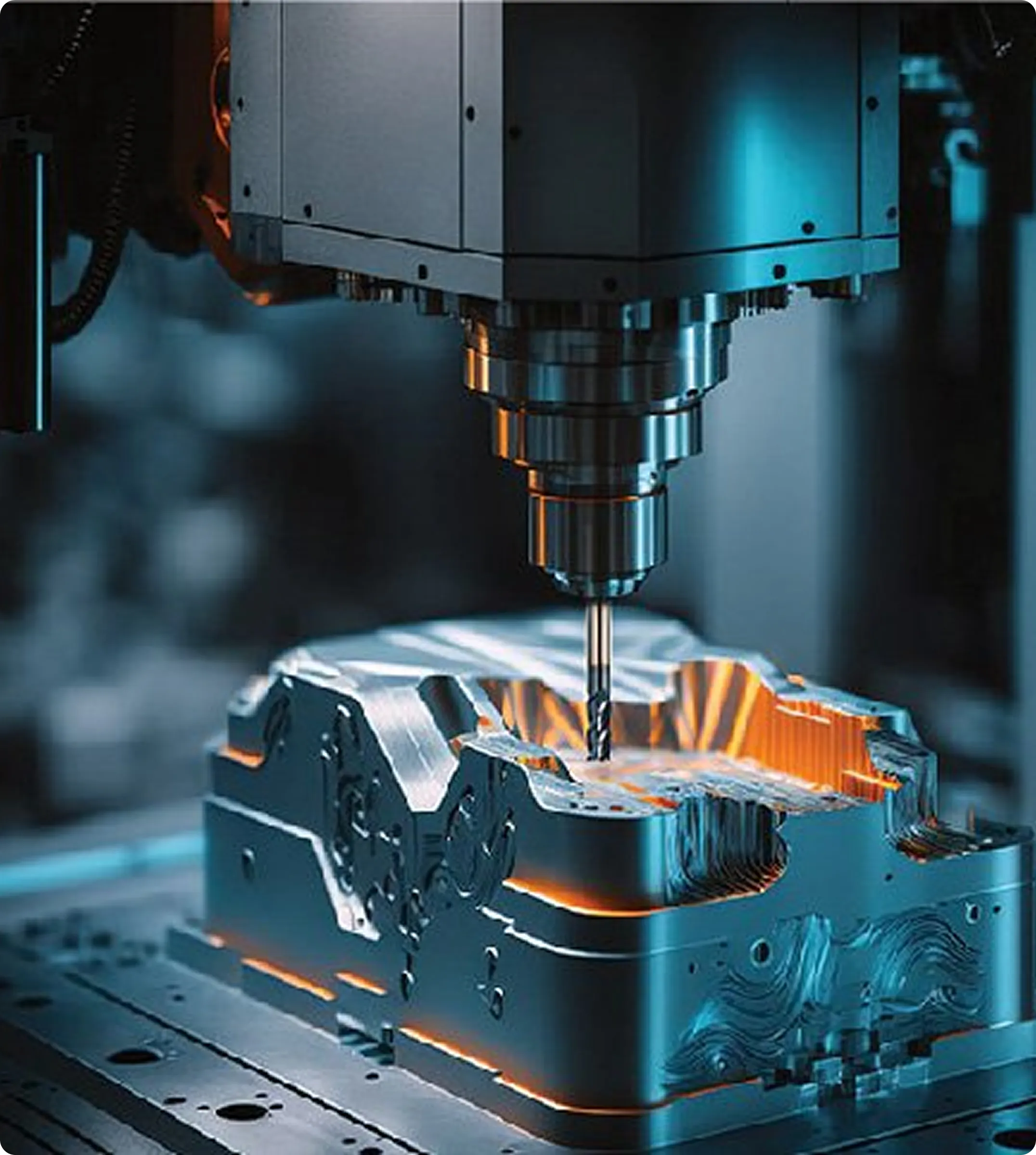
(Vietnam is strengthening capabilities in precision manufacturing and other higher-value industrial activities)
Stronger supporting industries and local supplier networks
Vietnam is increasingly strengthening its supporting-industry ecosystem alongside the expansion of foreign-invested manufacturing. In 2026, the government approved the Supporting Industry Development Program for 2026-2035, which aims to improve domestic production capacity, increase localization, and strengthen links between Vietnamese suppliers and foreign-invested manufacturers. The program also targets the development of domestic companies into Tier 1 and Tier 2 suppliers for leading local and international manufacturers.
For global OEMs, this points to a gradually developing local supplier ecosystem and more opportunities to source qualified components and manufacturing services in Vietnam.
CNCTech is one of Vietnam’s leading integrated industrial ecosystems, providing comprehensive manufacturing solutions to international companies and brands such as DENSO, Panasonic, Yamaha, BYD, Samsung, and Foxconn. CNCTech operates a network of modern manufacturing facilities equipped with advanced production systems, offering integrated capabilities ranging from precision CNC machining, tooling and fixture manufacturing, injection molding, sheet metal fabrication, and surface treatment. With an experienced engineering team and rigorous quality control processes, CNCTech meets demanding technical requirements and tight tolerances while optimizing cost efficiency for customers. CNCTech supports international companies in building and optimizing their manufacturing supply chains in Vietnam with greater flexibility and long-term sustainability.
Why Vietnam manufacturing matters to global OEMs
For global OEMs, Vietnam's attractiveness comes from a combination of factors rather than a single cost advantage.
Competitive manufacturing costs
Cost competitiveness remains one factor in Vietnam's manufacturing appeal, but for global OEMs, supplier capability, quality, scalability and reliability are increasingly important alongside cost.
Growing manufacturing capabilities
The country's supplier base covers a growing range of manufacturing processes, from electronics and assembly to precision machining, tooling, injection molding, sheet metal fabrication, and industrial equipment.
This gives OEMs more opportunities to source components and services through Vietnam manufacturing suppliers.
Strategic location and global market access
Vietnam manufacturing benefits from the country's location in Southeast Asia, which provides access to regional supply chains, while its network of free trade agreements supports international trade.
For companies seeking to establish a production base in Asia, this combination can make Vietnam a strategically attractive option. For global OEMs sourcing from Vietnam, CNCTech further supports this advantage through its network of manufacturing facilities and integrated production capabilities, enabling customers to consolidate multiple manufacturing processes with a single local partner.
Supply chain diversification
Perhaps most importantly, Vietnam can provide an additional manufacturing base for companies seeking to reduce concentration risk.
Instead of moving an entire supply chain, an OEM can begin by qualifying Vietnamese suppliers for selected components or production lines and gradually expand the relationship as capabilities and volumes grow.
Vietnam manufacturing opportunities for global OEMs
Vietnam manufacturing offers global OEMs opportunities to diversify suppliers, outsource components and subassemblies, scale production without building a new facility, and develop long-term manufacturing partnerships.
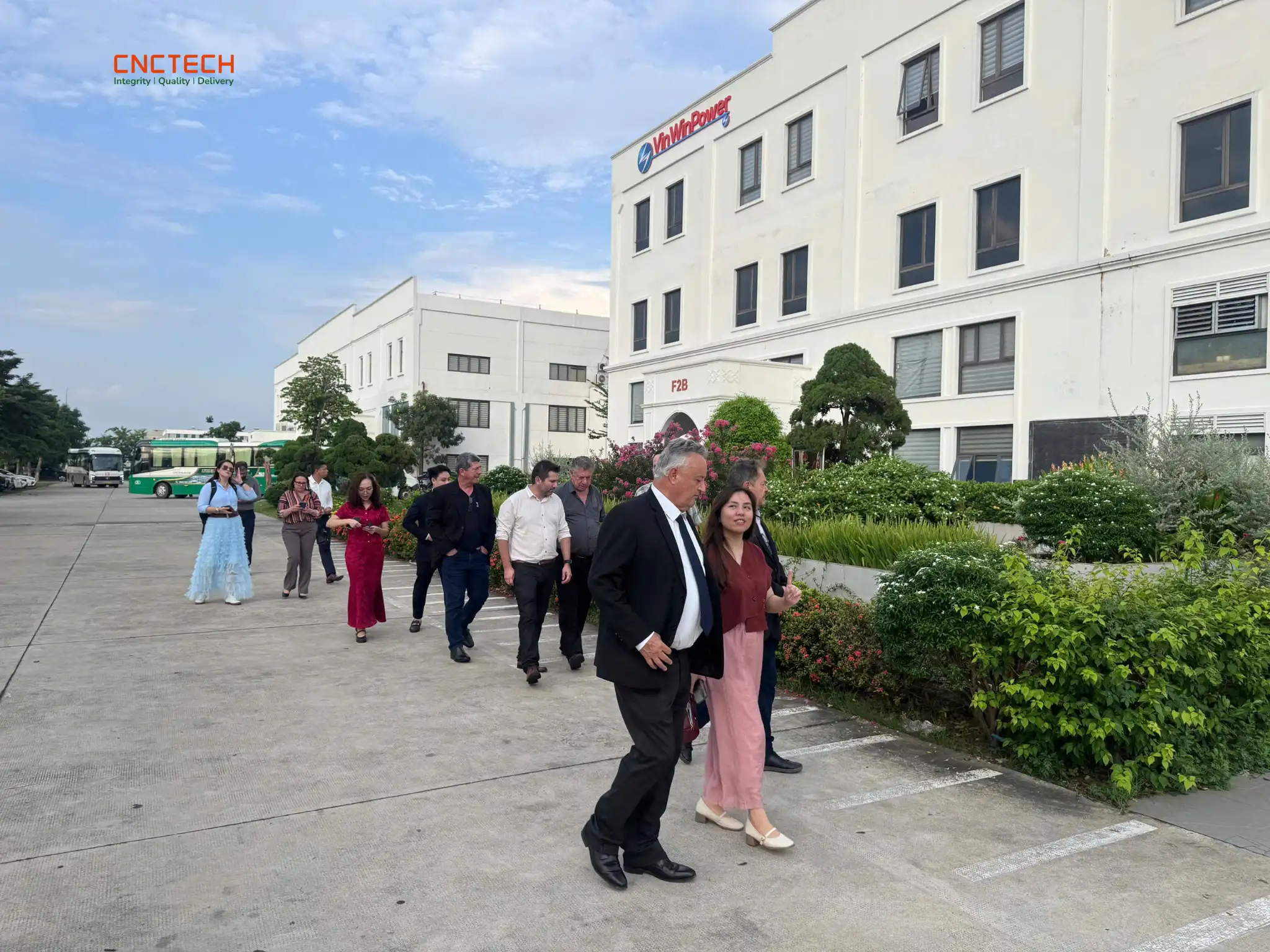
(Factory audits allow global OEMs to verify a supplier's manufacturing capabilities, quality systems, and production capacity)
Diversifying manufacturing sources
OEMs can use Vietnam to diversify their supplier base and reduce dependence on a single production location.
This can involve dual sourcing, regional sourcing, or establishing Vietnam-based production for new product lines.
Outsourcing components and subassemblies
Vietnam can support outsourced production of a range of industrial components and assemblies, depending on supplier capabilities and production requirements.
Depending on the supplier's capabilities, this may include CNC-machined components, sheet metal parts, injection-molded products, tooling, fabricated assemblies, and other custom components.
Scaling production without building a new facility
Contract manufacturing can allow OEMs to access existing production infrastructure without immediately investing in their own factory.
This can be particularly useful when entering a new market, testing a new supplier base, or scaling production without significant upfront capital expenditure.
Building long-term manufacturing partnerships
The strongest opportunity is not simply finding a low-cost supplier. Global OEMs increasingly need manufacturing partners that can provide quality, engineering support, scalability, and supply-chain reliability.
This creates opportunities for Vietnamese manufacturers with mature production systems and international customer experience to support the development of Vietnam manufacturing through long-term partnerships with global OEMs.
What global OEMs should look for in a Vietnam manufacturing partner
Choosing the right partner is critical to capturing the benefits of Vietnam manufacturing.
OEMs should evaluate a supplier's:
Manufacturing capabilities: Can the supplier handle the required processes and materials?
Quality management: Are quality systems, inspection processes, traceability, and relevant certifications in place?
Engineering capabilities: Can the supplier support DFM, drawing review, prototyping, and process optimization?
Production capacity: Can it support the transition from prototype to mass production?
Scalability: Can capacity increase as demand grows?
Supply chain management: Can the supplier reliably manage materials, production, and delivery?
Factory transparency: Can the OEM conduct factory audits and verify production capabilities?
International experience: Does the supplier understand global OEM quality and communication requirements?
→ For a detailed framework on how to assess and qualify a contract manufacturer, see our guide: How to Choose the Right Contract Manufacturing Partner.
For international buyers, the right partner is therefore not necessarily the supplier offering the lowest quotation. Technical communication, drawing interpretation, quality consistency, production scalability, and the ability to manage multiple manufacturing processes can be equally important. For OEMs evaluating Vietnam as a sourcing destination, we recommend assessing these capabilities before comparing unit prices.
CNCTech: An Integrated Manufacturing Launchpad for Global OEMs in Vietnam
For global OEMs, CNCTech brings together the manufacturing capabilities, engineering expertise, and production scale needed to source from Vietnam through a single integrated partner.
Trusted by leading global companies
CNCTech serves international customers across automotive, electronics, industrial equipment, and high-tech manufacturing, including DENSO, MABUCHI MOTOR, YAMAHA, Panasonic,... With 300+ global customers across 35+ countries, CNCTech has extensive experience meeting international quality, engineering, and supply-chain requirements.
Scale and integrated capabilities
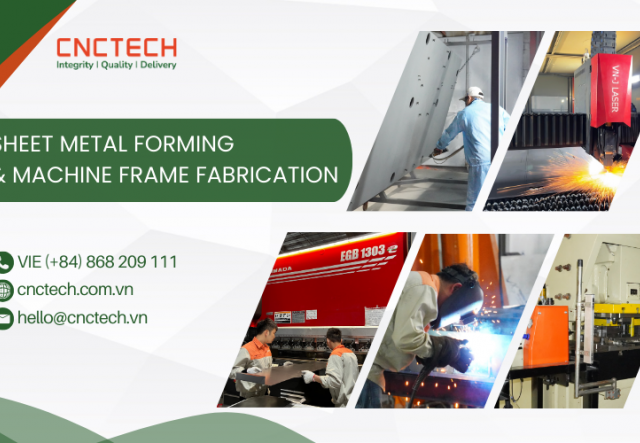
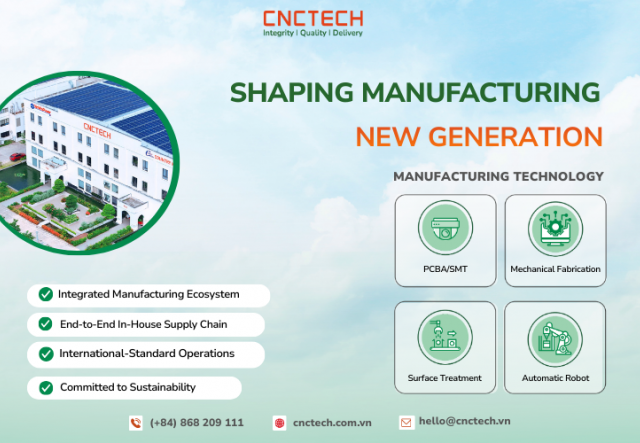
CNCTech operates 8 manufacturing facilities with more than 60,000 m² of production space and over 400 machining centers, providing the capacity to support both individual components and large-scale production programs. Its integrated capabilities cover precision CNC machining, tooling and molding, injection molding, sheet metal fabrication, surface treatment, automation and system integration, and EMS/OEM/ODM manufacturing.
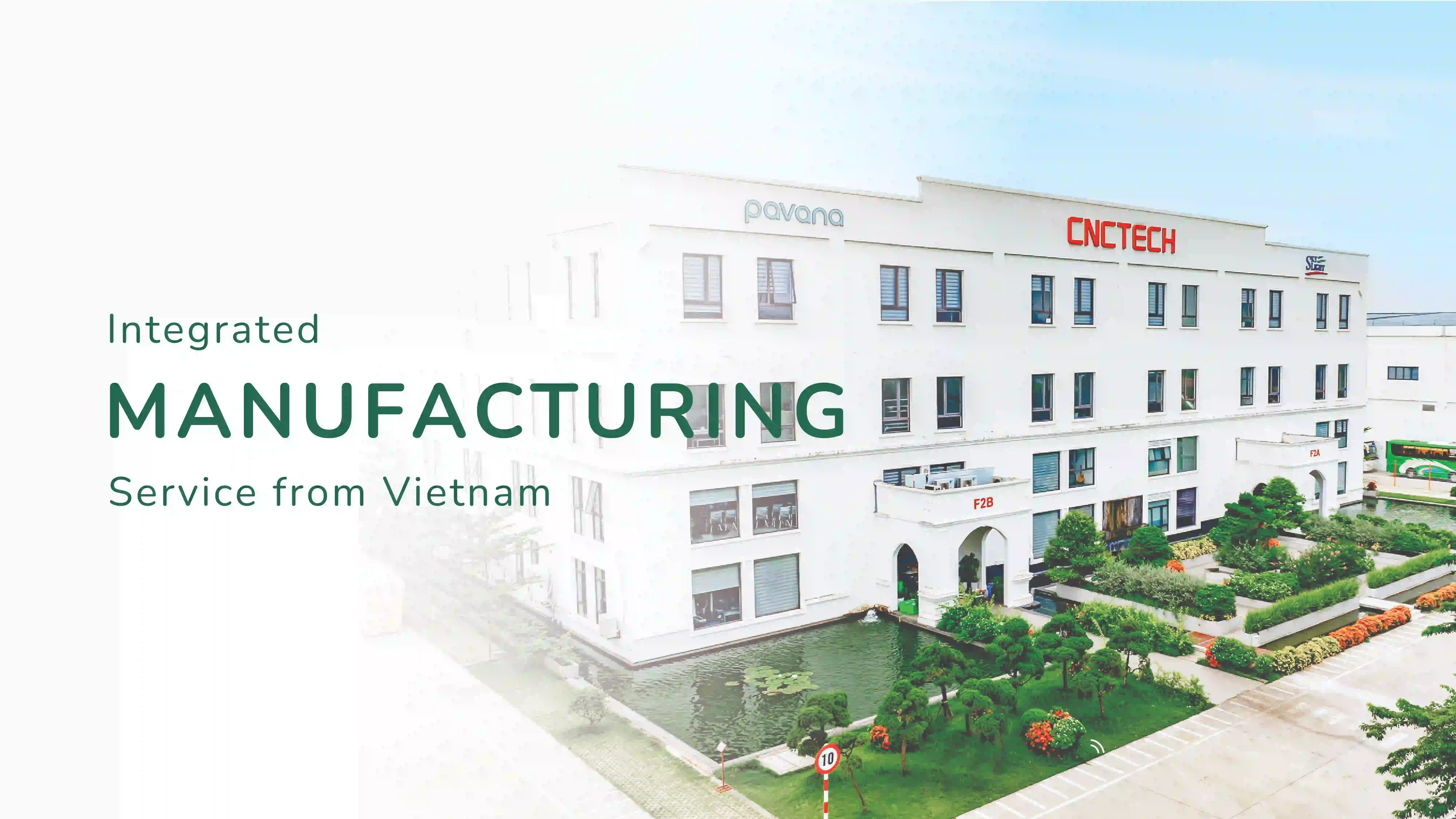
(CNCTech - Integrated manufacturing service from Vietnam)
For OEMs, this integrated model means fewer suppliers to coordinate and greater control across the production process. Customers can work with one Vietnam-based partner from tooling and individual components to assemblies and large-scale manufacturing, helping simplify supplier management and build a more efficient, flexible, and resilient supply chain.
Frequently Asked Questions (FAQ)
What is the China+1 strategy?
The China+1 strategy is a supply-chain diversification approach in which a company maintains manufacturing or sourcing operations in China while adding production capacity or suppliers in another country. The goal is to reduce concentration risk without necessarily abandoning an established China-based supply chain.
Why is Vietnam a popular China+1 destination?
Vietnam combines an established manufacturing base, proximity to China, access to international markets through trade agreements, and a developing supporting-industry ecosystem. Government initiatives such as the Supporting Industry Development Program for 2026-2035 also aim to strengthen domestic suppliers and their participation in global value chains.
Is Vietnam suitable for contract manufacturing?
Yes. Vietnam has an expanding contract manufacturing ecosystem covering areas such as precision machining, injection molding, tooling, sheet metal fabrication, electronics, assembly, and OEM/ODM production.
CNCTech is one example of an integrated manufacturing model in Vietnam, offering capabilities ranging from precision CNC machining, tooling and molding, injection molding, and sheet metal fabrication to surface treatment, automation, and EMS/OEM/ODM manufacturing. This makes Vietnam manufacturing increasingly relevant for OEMs looking to outsource components, assemblies, or selected production processes.
What industries are growing in Vietnam's manufacturing sector?
Key areas include electronics, automotive and mobility, industrial machinery, precision manufacturing, semiconductor supporting industries, and other high-tech manufacturing segments. Government industrial-development programs are also prioritizing supporting industries and higher-value production.
What should OEMs consider before sourcing from Vietnam?
OEMs should evaluate supplier capabilities, quality management, engineering support, production capacity, scalability, supply-chain reliability, certifications, factory transparency, and experience serving international customers.
Factory audits and technical qualification processes can help verify whether a supplier is suitable for long-term production. Manufacturers such as CNCTech also support international customers through integrated manufacturing capabilities, rigorous quality control processes, and the ability to meet multiple production requirements within a single ecosystem.
Conclusion
Vietnam manufacturing is evolving from a cost-competitive production option into a broader manufacturing ecosystem capable of supporting increasingly sophisticated global supply chains. Strong industrial growth, continued foreign investment, supply-chain diversification, and the development of supporting industries are creating new opportunities for global OEMs.
For companies considering Vietnam as a sourcing or production base, the next step is not simply finding a supplier-it is identifying a manufacturing partner with the quality, engineering capabilities, capacity, and scalability required for long-term cooperation.
Contact information
Email: hello@cnctech.vn
Phone: (+84) 868 208 111
Corporate Website: https://cnctech.com.vn/
Manufacturing Technology Website: https://cnctech.com.vn/manufacturing
Linkedin: linkedin.com/company/cnctech-manufacturing-technology
Tiktok: https://www.tiktok.com/@cnctechmanufacturing
Youtube: https://www.youtube.com/@cnctech-vn

Tin tức liên quan